
the modern salad
A story of highways, cold chains, and the industrial rise of pre-washed salad.

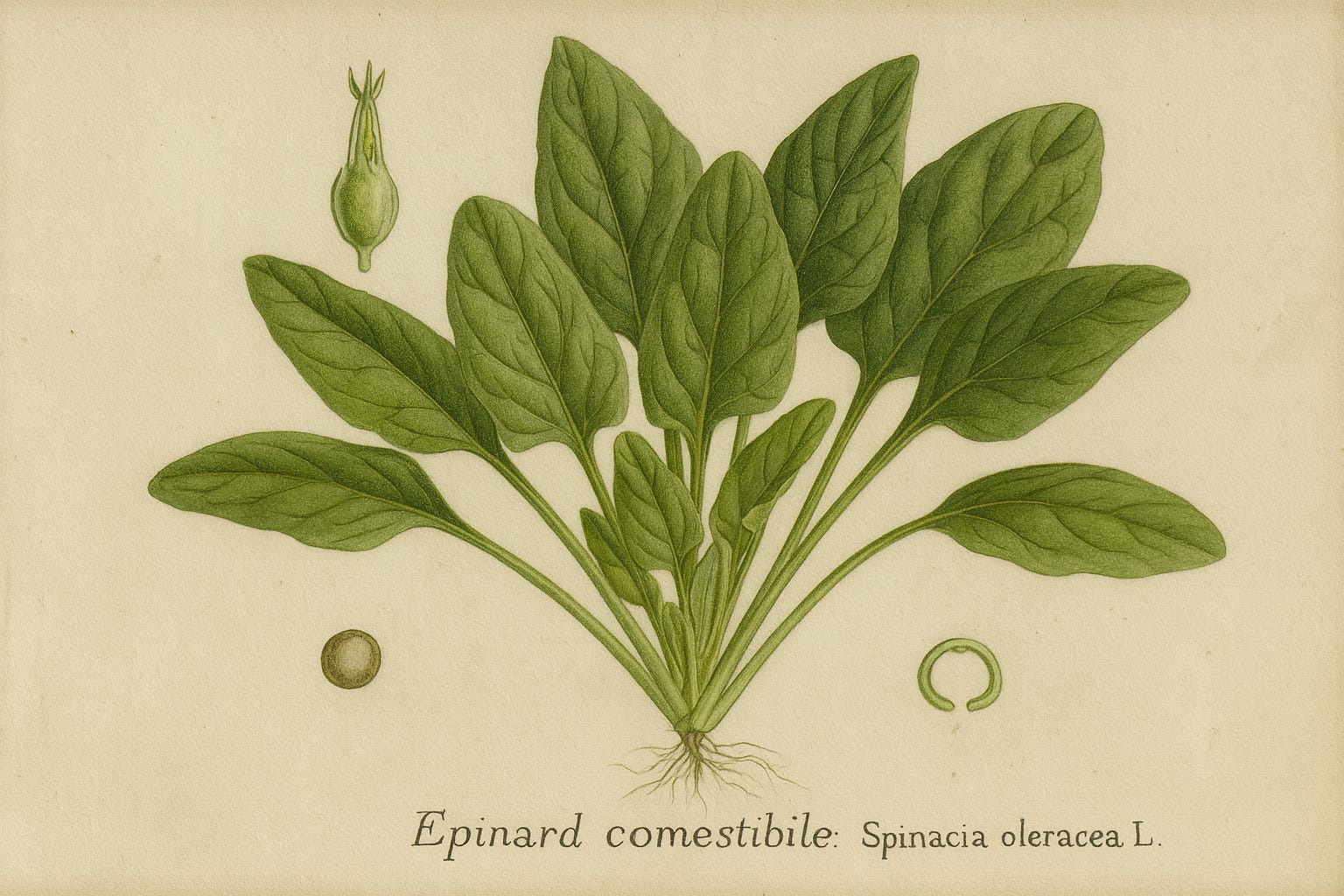
The year is 2025. You stop by the grocery store on your way home from work. Without thinking, you grab a plastic clamshell of pre-washed baby spinach from the refrigerated shelf, toss it into your basket, and later into a bowl.
The modern salad is a marvel of infrastructure, chemistry, wartime logistics, and shifting labor dynamics. It’s the product of cold chains and crop science, interstate highways and shelf-life engineering. And like most things in America, it was born in war and scaled by capitalism.
But rewind one hundred years and this would have been science fiction. The idea that you can walk into a fluorescent-lit store in snowy New York in January and leave with a delicate packaged bag of leafy greens would have been laughable a century ago.
This is the story of how those leaves came to be washed with bubbles, fluffed by mechanical paddles, sorted by optical scanners, spun dry, and sealed in nitrogen-flushed modified atmosphere packaging.
when salad was seasonal
Before refrigeration, before plastic, before highways sliced the continent into shipping lanes, people ate what they could grow, store, or preserve. In America, wealthier families had icehouses built to store ice and food on ice to extend shelf life. For the average person, vegetables came from the backyard or the neighbor’s field. Produce was seasonal. If you wanted lettuce in January, you were out of luck. You ate pickled beets, salted beans, potatoes from the root cellar.
Preservation was the only way food lasted through the seasons. The options were mainly to salt, smoke, dry or can. These foods could then be stored in cool places, like cellars and caves, to save for times of need during droughts and famines. Ice, when you had it, was hauled in blocks and packed in sawdust to slow down melting.
During World War II, these preservation mechanisms were scaled. The war demanded calories delivered to distant fronts in tin cans and cardboard boxes. This accelerated process innovations in preservation, drying and canning. To make room for military rations, the U.S. government1 urged Americans to plant ‘victory gardens’ and can their own vegetables to help free up more factory-processed foods for use by the military. These kitchen gardens sprung up in yards and schoolyards as decentralized food resilience.
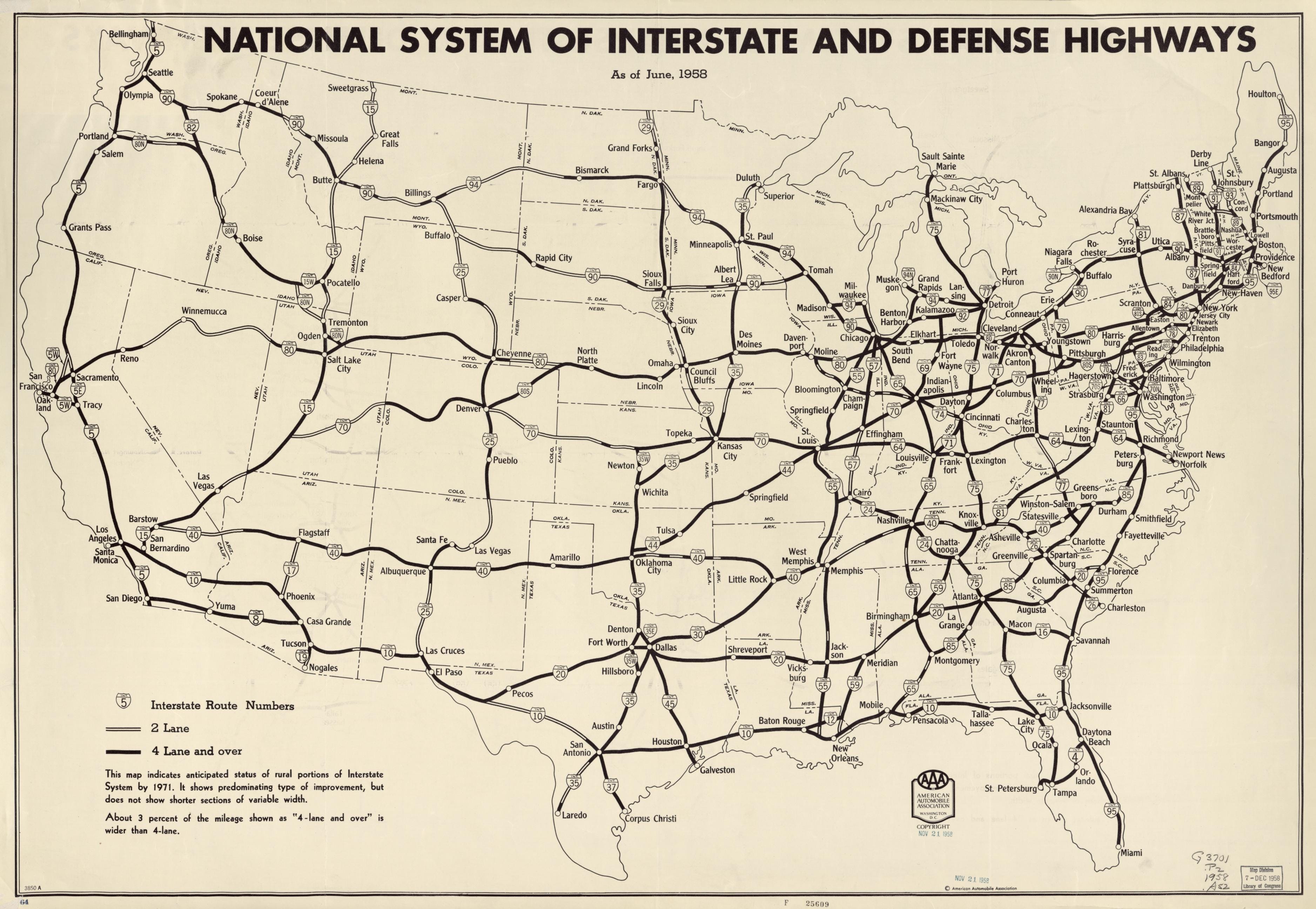
Behind the scenes, the military was solving a different problem: how to move fresh food — and ammunition, personnel and equipment — over long distances without spoilage or delay. During the war, General Eisenhower saw how Germany’s autobahn allowed for fast, efficient movement of troops and supplies, which was crucial for military operations. After the war, Eisenhower recognized that the United States needed a similar system for both national defense and economic growth. He pushed through the Federal-Aid Highway Act of 1956, creating over 40,000 miles of interstate roads during his presidential term.
This network of highways sliced through America and laid the foundation for a new American diet. Perishables could now move from one coast to another within days rather than weeks. But speed alone wasn’t enough. For every hour salad leaves aren’t refrigerated, they lose a day of shelf life. What unlocked fresh food at scale wasn’t just the highway. It was the refrigerator on wheels.
the cold chain
Let’s back up a little to the the 1930s. Where a self-taught inventor and engineer in Minnesota named Frederick McKinley Jones2 was working on a problem that had stumped the railroads for decades. Rail cars full of meat were spoiling before they reached the East Coast. Jones’s solution was radical for the time: a fully self-contained refrigeration unit that didn’t rely on ice at all. His “Model C” ran on its own motor, mounted to the front of a trailer like a ship’s prow, pushing cold air into the cargo hold.
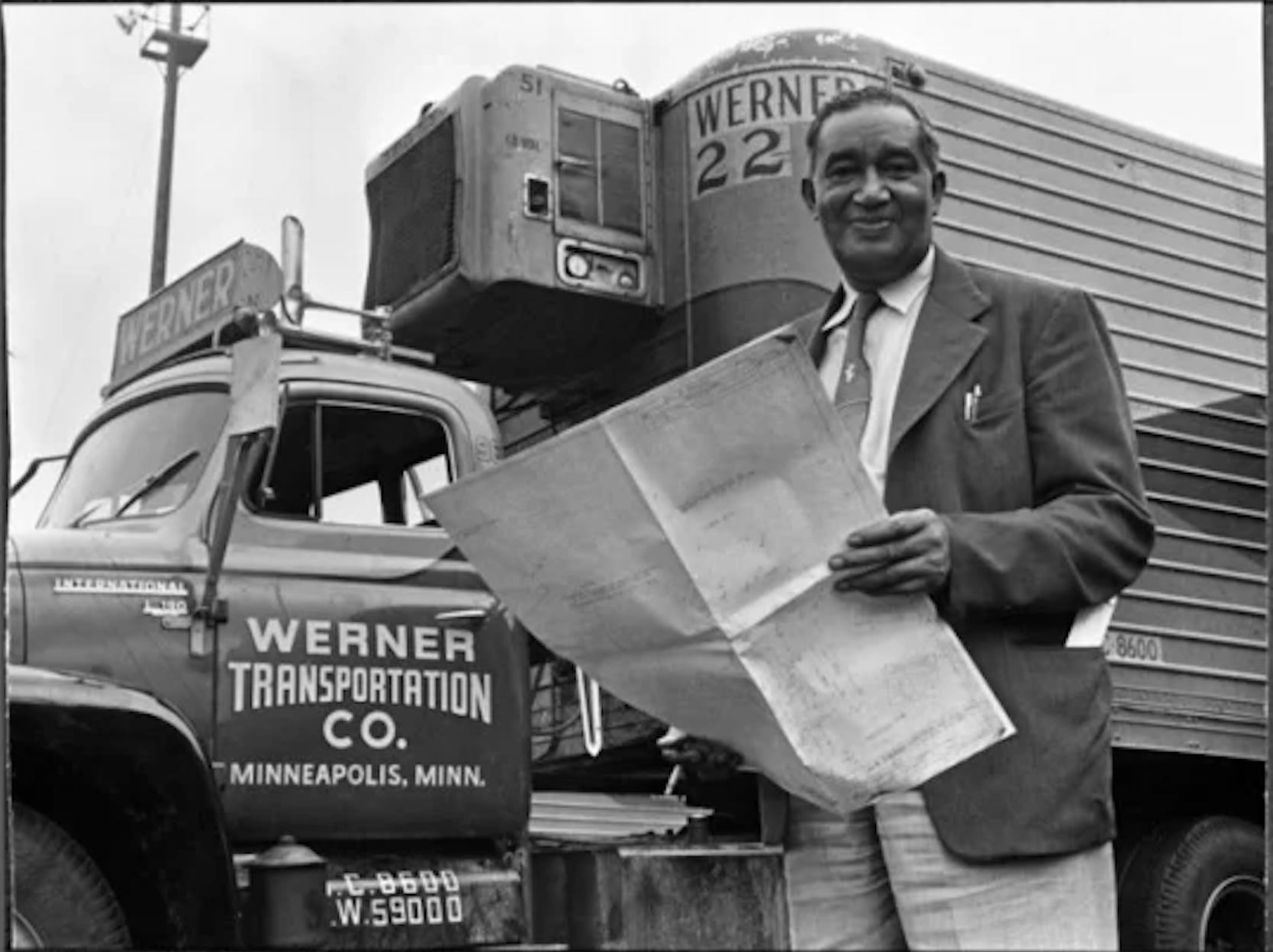
While the Model C was first used for commercial food transport, its effectiveness quickly caught the attention of the U.S. military and during World War II, the adoption of Jones’s invention accelerated dramatically. The military needed reliable ways to transport blood plasma, medicines, and food to the frontlines. His machines became the backbone of the wartime supply.
By the time the war ended, the concept of “cold chain logistics” had taken root. Model C units were initially manufactured for military use, but following the war the units became available for commercial use as well.
In the decades that followed, the cold chain took shape. Truck-mounted refrigeration gave way to entire fleets. Cold storage warehouses sprang up near ports and rail junctions.
By the 1950s, two parallel systems had quietly matured. 40,000 miles of freshly poured interstate asphalt, slicing across farmland and desert, linking fields to cities. Portable refrigeration had moved from wartime necessity to civilian infrastructure, transforming trucks into mobile cold rooms.
A perfect storm of roads and refrigeration laid the foundation for the food supply chain. Perishables that once rotted in place could travel coast to coast in days, arriving cold, food-safe, and ready for sale.
sealed for freshness
Even with temperature-controlled trucks and warehouses, leafy greens were still too fragile for cross-country travel. By the time delicate greens were harvested, boxed, shipped, and shelved, they were already halfway to spoiled. Cold air slowed the decay, but it couldn’t stop it.
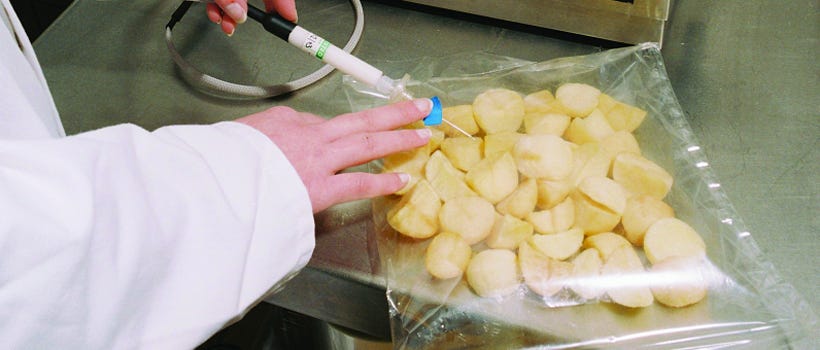
The real breakthrough came in the 1990s with Modified Atmosphere Packaging3 (MAP). You’ve seen it, even if you didn’t know the name4. MAP is the reason pre-washed salad doesn’t wilt into a soggy mess by the time you get it.
Instead of sealing the greens in ambient air, processors flush the bag with a precise blend of gases — typically 80% nitrogen, 15% carbon dioxide, and just 5% oxygen. As a reminder for those of you who forgot what we learned in 5th grade science class, our regular atmosphere is closer to 80% nitrogen and 20% oxygen. The reduced oxygen slows down respiration and microbial growth. Nitrogen, being inert, fills the bag like a cushion, creating the soft, slightly inflated “pillow” that protects delicate leaves from being crushed or bruised during transport and handling5. The right blend of gases is fine-tuned for every produce category that balances between suffocating the produce and preventing spoilage. Once the package is opened or the greens are removed from their packaging, they are exposed to regular air.
industrial salad
But we still aren’t quite at the modern pre-packaged box of salad leaves. By now in our story, we have the roads, the refrigeration, the packaging science. And yet baby spinach with its fragile, bruise-prone leaves carrying fieldborne microbes wasn’t an obvious candidate for national distribution. So how did we end up with bags of pre-washed, pre-cut leaves on every grocery shelf?
This is where our humble leaf meets the industrial food system.
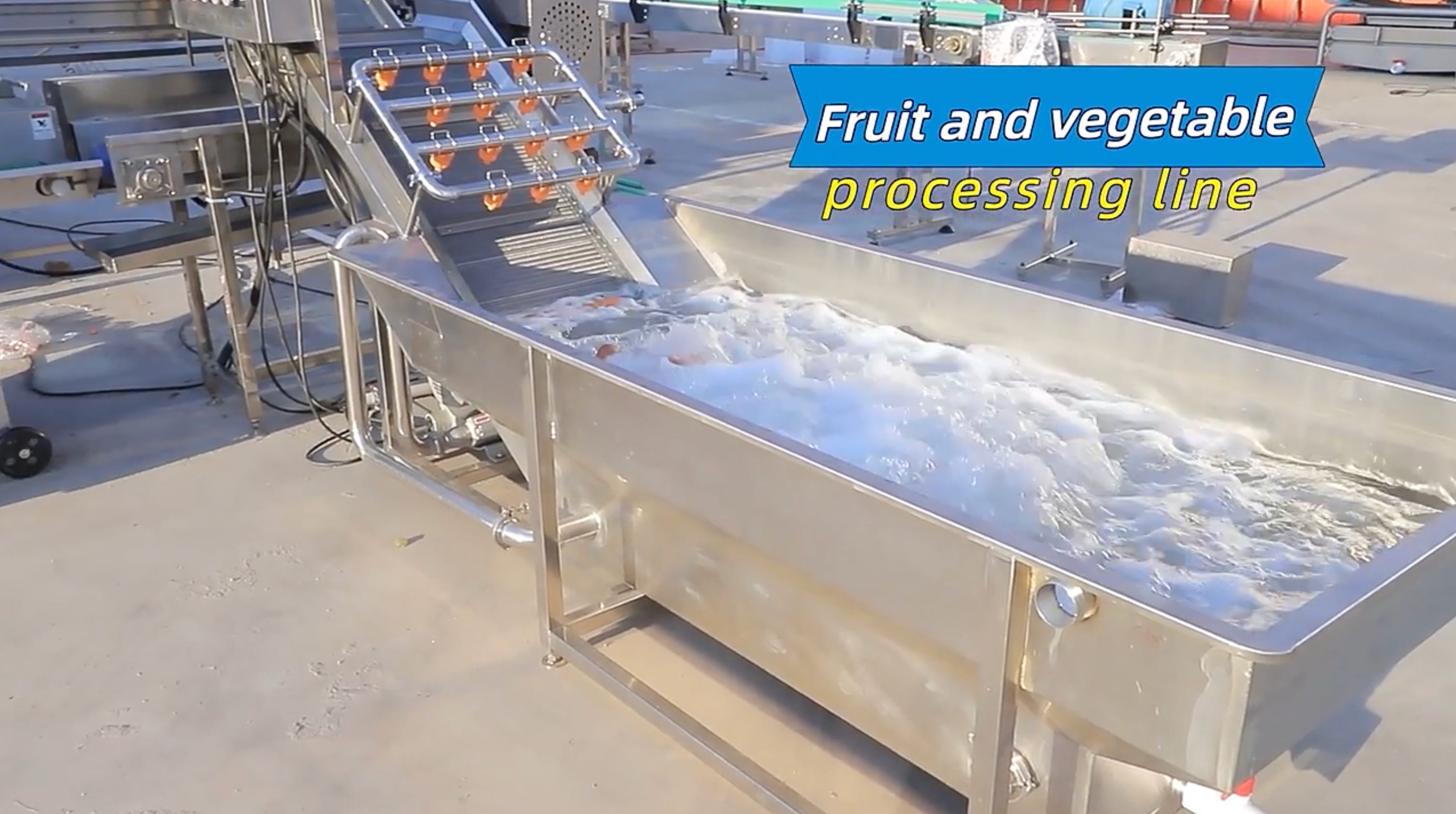
First, the spinach is bubble-washed in chilled, chlorinated water. Tiny air jets lift grit and microbes from the folds without tearing the delicate leaves. After washing, gentle mechanical paddles stir through the wet greens to separate individual leaves6, break up clumps, and spread them into an even layer. Then the leaves are spun dry in high-speed centrifugal dryers, where water is flung away with force. From there, they ride down robotic conveyor belts under the eyes of optical scanners. Anything misshapen, discolored, or foreign is flagged and diverted.
By the end of this process, the unassuming box of leafy greens has become one of the most industrialized foods in the grocery store. Every step is optimized to protect delicate greens like baby spinach from bruising or microbial spoilage.
roads + cold chain + packaging + processing + ? = national salad distribution.
the grocery machine
With roads in place, mobile refrigeration, and processing and packaging dialed in, there was still one piece left: a retail system capable of turning spinach into a scalable business. This is where the modern grocery industry comes in.
By the late 20th century, grocery chains had matured into tightly run distribution machines. Decades of infrastructure investment and supply chain optimization turned what was once a regional patchwork into a national network.
Year-round stocking became the norm. With global sourcing and cold chain coordination, stores could keep shelves lined with salad greens in the dead of winter. Lettuce from California in February. Blueberries from Chile in December. Fresh produce was available year round and consumers were flocking to the shelves ready to buy it.
This created a stable consumer loop. When shoppers could count on finding greens week after week, they began building them into their routines. That predictability, in turn, made it worth investing in new formats — pre-cut, pre-washed, mix-ins, dressings, kits. The flywheel was spinning: reliable demand led to more innovation, which led to more convenience, which led to more demand.
This catapulted the category of “value-added” produce and grew it into a $14 billion industry7. Consumer demand and shifting labor dynamics both pulled value-add in the same direction. As more jobs emerged in non-agricultural sectors, consumer demand for produce that required less prep and more convenience boomed. A crop like spinach —fragile and tedious to clean — was ripe for optimization.
the most engineered produce aisle
For something that looks so fresh and natural, the modern salad is one of the most engineered things in the grocery store. Behind every box of baby spinach is a cascade of invisible systems: interstate highways, mobile refrigeration, modified atmosphere packaging, industrial wash lines, and national grocery supply chains.
Your box of pre-washed, pre-cut baby spinach is the product of war, labor, chemical engineering, and the logistical ambition to conquer both time and geography.
Thanks Sherry for the conversation that sparked this exploration :)
Related Reading
How Pineapples Got Cheap. Fascinating read on how pineapples considered precious but through centuries of supply-chain, canning and refrigeration innovation have become a pantry staple.
Indoor Agriculture Faces a Reckoning. I went down this whole other rabbit hole on the the fantasy vertical farming sold us and more on Bowery Farming.
The Dreamt Land by Mark Arax: If you’ve read his work, you’ll recognize his distinctive narrative style that is grounded, expansive, and layered with history. I tried to channel that spirit in this piece.
For a packet of mixed salad, for example, a typical EMA [equilibrium modified atmosphere] might consist of 5 per cent oxygen, 15 per cent carbon dioxide and 80 per cent nitrogen. This could increase the shelf life of the product to as long as eight days, whereas under air it would be lucky to remain fresh for four or five days — from Modified Atmosphere Packaging
Another packaging rabbithole I went down while researching this was OTR (Oxygen Transmission Rate) packaging. Developed around the same time as MAP, OTR packaging involves engineering plastic films to allow just the right amount of oxygen to pass through.
And the atmospheric control doesn’t stop at the bag. For produce not packaged with MAP, warehouses and distribution centers are often piped with nitrogen to help keep produce fresh for longer periods before it reaches grocery stores.
When researching for this piece, I came across a whole world of machines built for singular purposes: de-clumpers for breaking apart powders, specialized washers for every kind of vegetable, and many kinds of produce dryers.
“Despite being about twice the price of conventional offerings, value-added produce is becoming an increasingly popular choice for convenience-minded shoppers — and further growth opportunities abound. Value-added selections, which include packaged salads and pre-cut vegetables and fruit, had sales of $14.5 billion in the 52 weeks ending July 14, and account for 16% of total produce dollar revenues and 8% of volume” — from Supermarket News
Super interesting!! Never thought too much about my bags of spinach until now